jueves, 18 de febrero de 2010

chapter 3 crying of lot 49 :(


In Chapter 3 of The Crying of Lot 49 we find an awkward scene in which a message is found in a strange place. We see an episode when Oedipa finds a note in the bathroom. She finds a symbol and some message, “Interested in sophisticated fun? You, hubby, girl friends. The more the merrier. Get in touch with Kirby, through Waste only, Box 7391, L. A.” (Pg 38). This note worries her and she begins to think of what the message could mean. In the world we live in today there could be many scares with finding a note like this. Most of the time the person who finds the note either leaves it there, or he or she throws it away. Occasionally a smart person who finds a mysterious note will question it until answers are found.


In many books, we constantly see the main characters find clues of what they want in symbols and other weird and abnormal objects. If we take The Da Vinci Code for example we see hoe the protagonist is always finding new symbols to interpret and find out why it is there and what it could lead to. those findings show that mean something important for him to achieve his quest. this happens in everyday life as well. many people spend hours looking for mysterious things to be able to explore and find out. when making a finding like this, usually the person becomes ecstatic and dedicates him or herself to that new finding until he or she is finished with it. In the book, She isn’t even looking for something. So this symbol must be a start to her problems, or start for her solutions. Either way it leads her to a brand new mystery in life.


candide chapters 17-18


In these chapters of Candide, Voltaire shows how unfortunate life can be. You must always be prepared for whatever life may throw at you. Candide and his traveling partner go through episodes of very unfortunate events, but beyond all that hardship, the two men find themselves in a strange village which seems to be quite wealthy, but not aware of it. There are also many examples in life where the same situation takes place. "You don't know what you have until it is gone," is the perfect saying to match it. Back in Cali, i had many friends and it was normal to me. I played with them when i was very little but i never really appreciated the fun times i shared with them. Then the day came when I was forced to move to Bogota. I truly realized what i had lost and what a treasure i had while i was there.

The book continues with Candide and his partner going to an inn which was quite similar to the european palaces he had seen. He is quite confused because staying at a place like that should cost a great deal of money or gold, but the managers would laugh when they would try to pay. In the end, Candide begins to think that maybe this city runs on goodness. maybe the people of the city do their jobs and provide for others just for the good of it, or because they know they will receive the same hospitality in return. still, his curiosity could not be quenched; therefore, he went to go find someone who could tell him a little more about the city's past and why they acted the way they did. On the road they came to a sage who told them about the grand city of El Dorado. The city was full of grand riches but that did not matter to the people because of their humbleness and love for one another. They were very thankful to their gods for keeping them safe from conquests and other intruders and they had many ceremonies to celebrate their abundance of joy.

even though the city was grand and the people were amazing and it was the closest place to a utopia then could ever be imagined, Candide decided that he could not stay in El Dorado any longer. After a month, Candide goes on a journey to go find Cunegonde and to try and bring as many riches as he could in order to be the love of his life away from the man to which she was with. This also demonstrates the theory that love conquers all. Candide was basically in a Utopia, but because his love was not there to share it with him, he did not feel satisfied.

chapters 11-12


Dawkins creates "The Prisoners Dilemma." In this game, there are three players. The first player is the banker or judge and gives the winnings to each player by how they play the game. The other two players play. The game was made to see which personality wins the game. In the game, the two players each get cards. The cards are named: cooperate and defect. The game was designed like this. The first player goes between the two other players and tells them when to start. Then the other players hold up their cards. If both players "cooperate," then they shall be given the same amount of points. If the players choose "defect" then the players shall have the same amount of points taken away from their own personal score. If player one defects and player two cooperates, then player one would have points taken away. If player one cooperates and player two defects, then and player one would get a lot of points added to their score.


Overall, both people must find a strategy in which both players can benefit from each other. Dawkins uses the game for nature.

After a while of using the prisoners dilemma, Dawkins came up with a new tactic to use which was quite similar in theory."Tit for Tat" strategy, which depends on both players copying exactly what the player before chose to do, and the "axelrod" strategy, which gives forgiveness and envy of the opposite player in order to defeat and win the game. These games show the many behaviors often displayed in nature on a daily basis.

chapter 10


Couples always want to have as many children as they possibly can. This has many different reasons behind it. In chapter 10 the book tells us of one of the reasons. That reason is so that their gene may grow and flourish. This result; however, can only be obtained depending on how much a mother gives to its offspring during conception and the formation of the child. The main problem would be in the gene pool. She must give a certain amount of herself in order for her to be prosperous.


Not only are the mothers selfish, the males are just as bad, if not worse! The less the male gives to each of her offspring, the more offspring he is able to have in her lifetime. This is where the deceiving comes into play. For the mother to end up winning in the situation, she must get her partner to invest more genes then her so that she will have a greater supply and can give more offspring with other partners. This selfish act results in more offspring, but with different genes mixed together and a difference in the environment.


In the past, both a variety of males and females have been the fault of deceiving. Males are more willing to investing less genes and having more partners then females are willing to invest less in their own offspring. It is for this reason that women are so picky when choosing their mate. The wait shows them who is worthy of their time, and who is just a waste.

chapter 8


In the eighth chapter, Dawkins shows how mothers create their offspring. In the book, he says that the mothers do a selfish act in creating offspring because they create them exactly as themselves and for their own benefit. What these mothers don't know is that no offspring can ever be identical to its mother. all genes and organisms are different. Brothers and sisters are closely related but never the same. They have the same mother and often times the same fathers, but no matter what no two living things can ever be the same. Genes are very obedient when it comes to there benefit. They do make mistakes. This makes them even more different then they would have been originally. For each child, the couple is different. it has many similarities and comes from the same genes and parents; but its effect can never be duplicated by another sibling from the same makeup.

A mother gives half genes to each of her offspring, because of selfishness which has already developed at the age of birth. The mother will only invest the same amount into each, but the act is reinforced at the young age, which will characterize most of its behavior.


Each of way is prone to help its particular specie to get ahead in the race of natural selection. Some birds lay their eggs in different species nests because when the egg hatches the normal action the young bird would take would be to kill the other unhatched eggs with its sharp beak and kill the other birds opportunity to be competition for food from the mother. When the mother comes back from her long journey insearch for food for her young ones, the child would be happy and show it in some obvious way for the act he has done and for the ease it will now be to have the food brought home by the mother. This would please the mother and give her inspiration to go get more food, giving the child the new horrible habit of greed and selfishness.

chapter 5


Selfish gene has a way of describing life in different manners. Dawkins makes sure to use different points in the book to show the parts of life in his view. Chapter 5 of the novel describes a genes environment to have everything in its surroundings and life as part of its setting. The environment has different landscapes and organisms which travel the earth in the same way, but it also includes other genes just like itself. Each of these genes is in the race for survival. the race is probably one of the toughest races and competitions one can be involved in. In chapter 5, Dawkins tells us that the genes have advanced in their senses. they are now much more aware of other genes and organisms which might be a threat to their chance of winning the race. of course winning the race is very difficult and the judges don't have pity or mercy on any of the genes. these judges are called “natural selection” they select those who they think are fit to continue on the earth. they act like machines. they have minds of their own and use them to their advantage. because they now have minds of their own, they have figured out that deceiving may be one of the only ways to win the race without having to change every so often.


They are aware that they can be deceived easily and if done, they shall not be victorious in the selection. the selection chooses the genes by the greatness of the specie. In order to use all of its environment to help itself and its specie, the gene must use the other genes in its environment to its advantage.


What the species don't know is that it would be better to just be good and honest. Being harmless will make them less targets to other species. All species will try everything and anything in order to make their spot in the race safer and less in danger of being taken out. This is a conspiracy and the negative part is that like the trust once held within the species, it can be abused. most scientists agree with this theory of the most beneficial thing for all is to act honestly and justly but the ones who strongly disagree and have good arguments against it will fight and create many problems.

lunes, 8 de febrero de 2010

Equals?

As I continue reading this book I keep noticing all the sections of society that Voltaire satirizes and mocks about. The one that I'm going to point at is mainly the hipocrisy of religious leaders and aristocracy. In chapter 16 Cunegonde's brother tells Candide and Cacambo that the Jesuit priest that took him in order, chose him because he found the colonel physically attractive. The fact that he comments this may mean that there was some type of gay relationship between the priest and the colonel. What Voltaire is mocking about here is that Jesuits and all christianity derivatives publicly condemn homosexualism because it clearly states in the Bible that homosexuals will not reach heaven.

Another example resemblance of aristocratic hipocrisy is when the colonel refuses to let Cunegonde marry Candide. After the colonel was sent to Paraguay to become a priest and a colon
el as well, he tells Candide that he plans to bring Cunegonde with him to Paraguay. Candide happily said that he will be joining them because he plans to marry Cunegonde. This plan does not please the colonel due to the fact that Candide is not of the nobility. The fact that the colonel knows everything that Candide and Cunegonde have been through should be enough reason for the colonel to at least keep his disgust to himself.

domingo, 7 de febrero de 2010

Church Hiprocrisy

Candide followed Cacambo's advice, they are joing the side of the Paraguayan rebellious Jesuits. So when they are reaching the rebel guard, the rebel guard thinks they are spaniards, which the father Provincial hates. They ask to talk to the colonel but he has their horses and weapons taken away from them as an act of contempt. Cacambo then clears the confusion and states that Candide is German, the colonel then, agrees to see him. The things that were seized from them are returned and they continue to a lavish pavillion. After talking, Candide finds out that the colonel was Cuengonde's brother. Candide tells the colonel that Cunegonde also survived the attack and that she is with the governor. The Jesuit rebellion is a clear example of hipocrisy in politics but specially in South American politics. The priests lead the native people against the spanish colonial government and they claim to be fighting too but they are not. Instead they exploit the rebels who are fighting with true conviction for implanted ideals. Having the natives on their side is a real convenience for them because the idea of having new converts in a "new world" is astonishing for the clergy. By the time the book is recreated, the dark side of colonization had already emerged.

Pride in Length


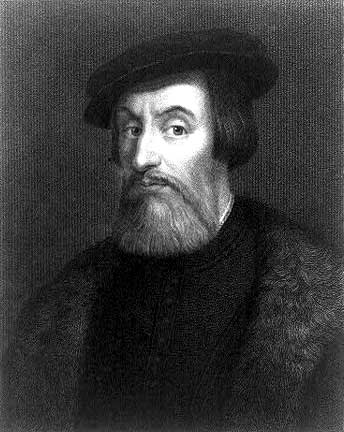
Reading Candide I began to look for sections in which Voltaire makes something satirical or funny. In chapter 13 I found a clear example of this. It said “upon the governor, Don Fernando d’Ibarra y Figueroa y Mascarenes y Lampourdos y Souza, a nobleman with a degree of pride appropriate to one who bore so many names” (Pg 58). Here we can see how Voltaire is using absurdity to make fun of the important people in the Colonizing America who had extraordinary long names like Hernan Cortes Pizarro Altamirano better known as simply Hernan Cortes or in this case “Don Fernando d’Ibarra y Figueroa y Mascarenes y Lampourdos y Souza”. If we look back at the quotation we may see that it also states “a nobleman with a degree of pride appropriate to one who bore so many names”. It tells us that all the names he has show the importance he has; moreso, it tells us that the pride he has of himself is showed by the many names he has. Mentioning the pride could mean that the importance is only his concept or just in his mind. We can see why Voltaire would make fun of those arrogant American governors, they were cruel and overbearing.